
- BUYER SERVICES
- SUPPLIER SERVICES
- COMPANY
- CONTACT US
- BUYER SERVICES
- SUPPLIER SERVICES
- COMPANY
- CONTACT US
The modern automotive industry, including motorcycle, ATV, and powersport, is an intricate web of synchronization. Building a vehicle requires thousands of individual parts, from microchips and electronic systems to massive steel frames, all sourced from a global network of suppliers. If a single shipment of bolts is delayed, or a piston specification is miscommunicated, an entire assembly line can come to a costly, time-consuming halt.
In an industry where an hour of downtime can cost hundreds of thousands of dollars, precision and speed are non-negotiable. This is why Electronic Data Interchange (EDI) has become a digital backbone of the automotive industry and just-in-time (JIT) manufacturing. By standardizing and automating how business document data flows, EDI links the entire lifecycle of a vehicle from raw parts delivery to a completed vehicle at the end of an assembly line.
How EDI Connects the Automotive Supply ChainAt its core, EDI replaces manual, paper-based processes with standardized, electronic communication allowing JIT manufacturing to take place. Using JIT manufacturing means materials and components are delivered and are put into use as soon as they arrive. This requires precise timing which is why the supply chain visibility EDI offers is essential. By utilizing documents such as the Ship Notice/Manifest (856), suppliers can notify the manufacturer exactly when the material shipment is on its way allowing them to prepare their facility for the precise moment it arrives. Many manufacturers will often issue payment from the ship notice because of the trust they have in the data accuracy and precision it provides the JIT manufacturing process.
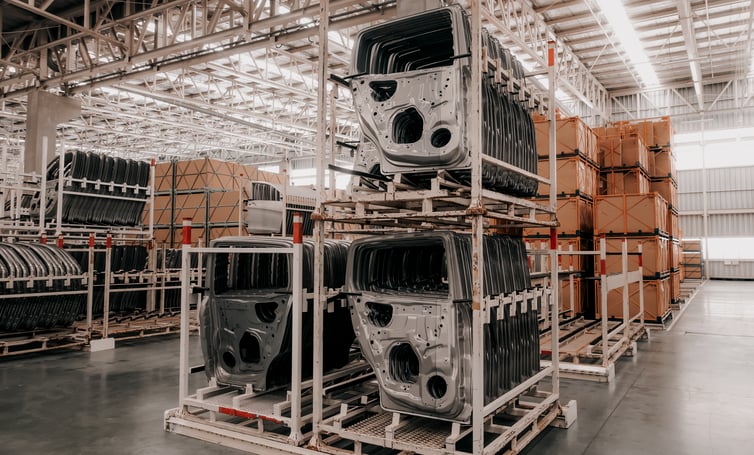
This digital exchange operates consistently across the entire automotive supply chain. The average vehicle is made up of a number of parts totaling somewhere around 30,000. Parts and components are sourced from a network of different suppliers, both national and international. To coordinate this global network of suppliers, purchase orders and planning schedules are sent out for anything from raw material to pre-assembled parts. This automated ordering system keeps a constant flow of parts for JIT manufacturing, which is critical because modern automotive manufacturing operates on incredibly tight schedules. Deliveries must be meticulously coordinated to avoid excess inventory storage while keeping their assembly lines moving.
Without EDI, the automotive supply chain would be a chaotic mix of emails, phone calls, faxes, and incompatible software systems. By creating a standard format of communication, EDI turns a fragmented group of independent businesses into a streamlined and collaborative network. When demand shifts, manufacturers can confidently adjust their planning schedules and update their needs of suppliers all over the country, eliminating guesswork and elevating visibility to their entire supply chain operations.
Automotive Manufactures
For major automotive manufacturers like Toyota, Honda, and other global automaker Original Equipment Manufacturers (OEMs), the ultimate goal is 100% supply chain connectivity across their supplier network. Achieving full connectivity allows automotive manufacturers to reduce administrative costs and order cycle times and gain complete visibility over their entire inventory.
Solutions like Supplier EDI Onboarding & Enabling Programs take the complexity out of managing a vast trading community by acting as a dedicated partner to help onboard suppliers with easy-to-use, web-based solutions, and offering testing and certification services for suppliers already EDI-capable. This ensures that every supplier, regardless of their size, is fully compliant with the automotive manufacturers’ EDI requirements, allowing for streamlined communication and for JIT manufacturing to seamlessly happen.
Automotive Suppliers
For small and medium-sized suppliers, meeting the strict EDI demands of OEMs can feel daunting. With web-based EDI subscription services, like Edict Systems’ WebEDI solution, suppliers can quickly and easily comply with the requirements of their customers. This solution takes the complexity out of the process with a simple, user-friendly interface. By allowing suppliers to easily function as a trading partner they can send and receive business documents without having to actually know EDI.
WebEDI provides many other benefits beyond simple meeting customer requirements:
In the fast-paced automotive industry, data is just as important as steel and rubber. By leveraging EDI solutions, OEMs and their diverse supplier networks can cut through the operational noise, eliminate costly errors, and keep assembly lines moving forward efficiently.
At Edict Systems, we are committed to simplifying EDI and empowering automotive manufacturers and suppliers to optimize their supply chain operations. If you're ready to unlock the value EDI can bring to your business, contact our EDI experts today.